
Wondering what Milford buyers expect from a home today? If you are planning to sell and move up, that question matters more than ever. Today’s buyers are looking closely at condition, convenience, and how easily they can picture daily life in a home, and a smart prep plan can help you stand out. Let’s dive in.
Why move-up buyers shop differently
Move-up buyers are usually not shopping for just any house. They are often comparing your home to where they live now and to the features they hope to gain next, whether that means more space, better flow, more storage, or less immediate work after closing.
That mindset makes presentation especially important. A recent Bright MLS buyer survey found that 56.1% of prospective buyers said a move-in-ready home with no repairs was very important, and another 37.8% said it was somewhat important. The National Association of REALTORS® 2025 remodeling report also notes that 46% of buyers are less willing to compromise on condition.
For Milford sellers, that means your goal is simple: help buyers feel that the home is well cared for, functional, and easy to step into.
What Milford buyers may notice first
Milford offers a lot of practical appeal for buyers who want suburban convenience and road access. The town’s comprehensive plan notes that Interstate 495 runs along the eastern edge of town, with Routes 16, 85, 109, and 140 also serving Milford, while the town is not served by MBTA commuter rail.
Because of that, features tied to car-based living can matter in your marketing and showing strategy. A clean driveway, organized garage, easy parking, and smooth entry from car to home can all support the lifestyle many Milford buyers are already imagining.
Milford also has strong everyday amenities you can reference factually when relevant. The town highlights an active downtown environment through its Downtown Revitalization Committee, and local assets like the Milford Town Library, Town Park improvements, and the Upper Charles Trail add to the town’s convenience and recreation appeal.
Start with curb appeal
Before buyers walk through your front door, they have already started forming an opinion online and from the street. According to a recent NAR report on staging and presentation, 92% of REALTORS® recommend improving curb appeal before listing, and 97% say curb appeal is important in attracting a buyer.
The good news is that curb appeal does not have to mean a major overhaul. In many cases, a tidy, well-maintained exterior sends the right message.
Focus on these basics:
- Mow and edge the lawn
- Trim overgrown shrubs and tree limbs
- Clear leaves, toys, and seasonal clutter
- Sweep walkways, steps, and porches
- Touch up peeling paint where needed
- Clean the front door, lights, and house numbers
- Make sure the driveway and front entry feel open and easy to use
If your front door or garage door looks tired, those may be worth extra attention. The 2025 Remodeling Impact Report found especially strong cost recovery for projects like a new steel front door, garage doors, siding, exterior paint, and other visible exterior updates.
Prioritize move-in-ready condition
You do not need to fully remodel your home to attract strong buyers. In fact, the data suggests that targeted improvements often make more sense than taking on a massive renovation right before listing.
The same NAR remodeling report points to painting the entire home, painting one room, and new roofing among the top projects REALTORS® recommend before selling. It also notes buyer demand for kitchen upgrades, new roofing, and bathroom renovation, but that does not mean every seller should start from scratch.
A better approach is usually to fix what is visibly worn, dated, or distracting. Buyers tend to respond well when a home feels clean, fresh, and maintained.
The best pre-listing updates to consider
If you want to prepare your Milford home efficiently, start with updates that improve first impressions and everyday function.
Paint in simple, neutral tones
Fresh paint is one of the easiest ways to make a home feel brighter and more current. Neutral colors can also help rooms look larger and allow buyers to focus on the space itself instead of your personal style.
Repair what buyers will notice
Loose hardware, marked-up walls, squeaky doors, cracked trim, and worn caulking can make a home feel less cared for than it really is. Small fixes often have an outsized impact because buyers notice details during showings.
Refresh flooring
Clean carpets thoroughly, refinish wood flooring if needed, and replace flooring only when wear is obvious. Flooring should feel clean, consistent, and easy to maintain.
Update key fixtures selectively
You may not need a full kitchen or bath renovation. Sometimes updated lighting, cabinet hardware, mirrors, faucets, or a clean vanity top can create a more current look without stretching your budget.
Address major functional issues
If the roof, heating system, or another core system has an obvious problem, handle that early when possible. Buyers are already cautious about condition, so visible deferred maintenance can reduce confidence quickly.
Stage the rooms that matter most
Staging is really about clarity. You want buyers to understand how each room lives and to picture themselves in it.
The NAR 2025 Profile of Home Staging found that 83% of buyers’ agents said staging made it easier for a buyer to visualize the property as a future home. That same report says the most important rooms to stage are the living room, primary bedroom, and kitchen.
For most Milford homes, that means focusing your effort where it counts most.
Living room
Make seating feel comfortable and conversational. Remove extra furniture so the room feels open, and keep surfaces simple.
Primary bedroom
Aim for calm and spacious. Clear dressers, reduce personal items, and use bedding that looks clean and tailored.
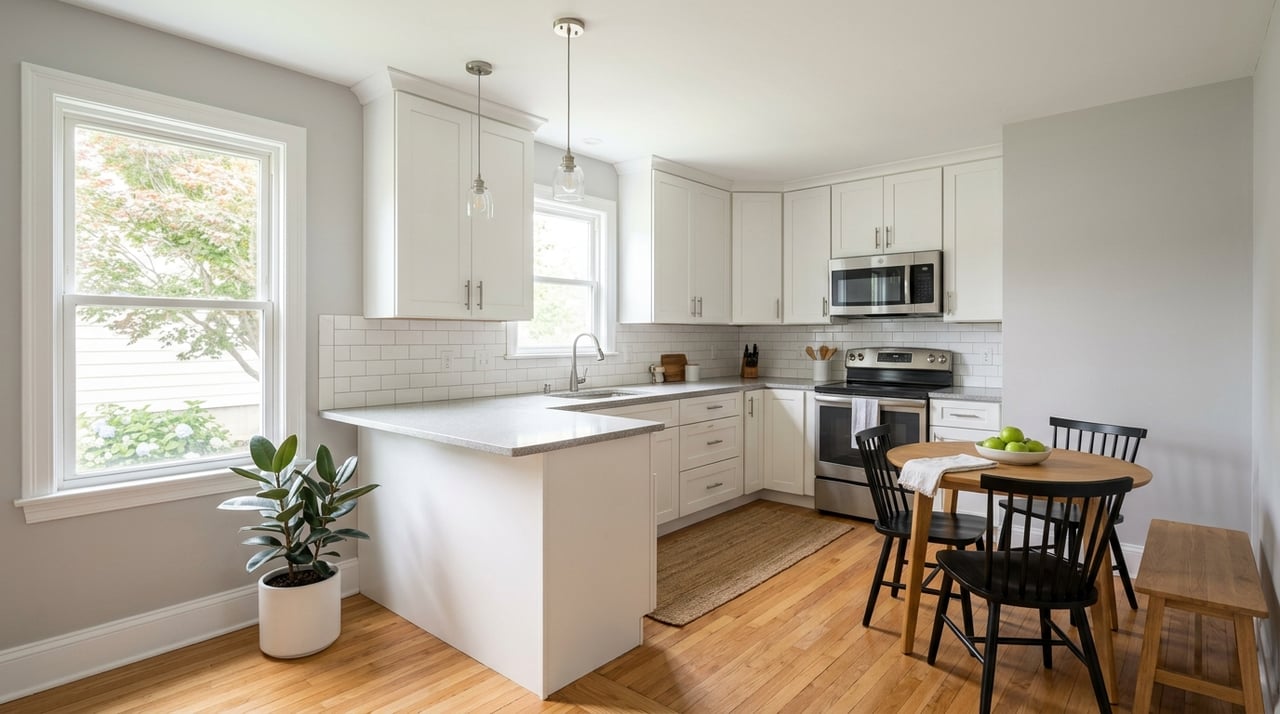
Kitchen
Clear counters, remove magnets and papers, and keep only a few practical or decorative items visible. Buyers want to see workspace, storage, and flow.
Make your home feel bigger and easier to use
Move-up buyers often want more room, but square footage is only part of the story. Layout, storage, and everyday usability matter too.
You can support that perception by removing bulky furniture, thinning out closets, organizing storage areas, and creating clear paths through each room. If you have a mudroom area, garage entry, or finished bonus space, make sure its purpose is easy to understand.
In a community like Milford, where many households are balancing work, errands, and daily driving, practical spaces can resonate. Buyers may respond well to features like a functional garage, a well-organized entry, a deck for outdoor use, or a yard that feels manageable and usable.
Highlight Milford lifestyle honestly
The strongest listing narratives connect your home to the town in a factual, grounded way. You do not need hype. You need context.
Milford has a long local history, including its origins in the 1600s and its granite heritage. For the right property, that kind of local detail can add texture and help your home feel connected to place.
You can also reference convenience to local amenities when it is accurate, such as downtown Milford, the library, parks, or the trail system. If your home is near local public school buildings, you can name them factually using the Milford Public Schools directory without making claims about school quality.
This kind of positioning matters because buyers are not just choosing a house. They are choosing how day-to-day life will feel there.
Use photos and marketing strategically
Your preparation work needs to show up well online. The staging report found that buyers’ agents place high value on photos, physical staging, videos, and virtual tours, with photos ranked highest.
That fits today’s market perfectly. Buyers often decide which homes deserve an in-person visit based on the first few images they see.
This is where a marketing-first plan matters:
- Professional listing photography that captures light, layout, and condition
- Room-by-room preparation before photos are taken
- Clear feature positioning in the listing description
- A pricing strategy that matches local competition and current buyer expectations
The goal is not just to list your home. It is to present it in a way that makes buyers stop scrolling and want to see more.
Know what not to do
One of the most common seller mistakes is over-improving in the wrong places. If you pour money into highly personal finishes or a full remodel that the market may not fully reward, you can add stress without adding enough value.
A more effective strategy is usually to focus on the items buyers notice most: condition, cleanliness, light cosmetic updates, curb appeal, and a strong presentation plan. For many sellers, that creates a better return than chasing perfection.
Why local guidance helps
Preparing your home is not only about repairs. It is also about deciding what to skip, what to fix first, how to price the home, and how to position it for the buyers most likely to respond.
That is one reason so many sellers still turn to professional representation. NAR reports that 91% of home sellers used a real estate agent or broker, and sellers especially value help with marketing, pricing, and selling within a specific time frame.
For a Milford move-up seller, strong guidance can help you make smart prep decisions without wasting time or budget. If you want a clear, practical plan for your next sale, CENTURY 21 can help you identify the updates that matter most, prepare your home for professional marketing, and position it to attract today’s buyers.
FAQs
What do move-up buyers in Milford, MA want most in a home?
- Many move-up buyers want a home that feels move-in ready, well maintained, and easy to live in, with strong everyday function and minimal immediate repairs.
Which home improvements matter most before selling a Milford home?
- Targeted updates like fresh paint, light repairs, curb appeal improvements, and addressing visible maintenance issues often make the biggest difference before listing.
Which rooms should you stage before listing a Milford home?
- The living room, primary bedroom, and kitchen usually deserve the most attention because buyers often focus on those spaces first.
How should you market a Milford, MA home to today’s buyers?
- Use strong photography, thoughtful staging, accurate pricing, and a listing story that highlights the home’s condition, layout, and relevant Milford amenities.
Is it worth renovating before selling a home in Milford?
- It depends on the home, but many sellers benefit more from strategic cosmetic updates and needed repairs than from a full renovation right before going to market.